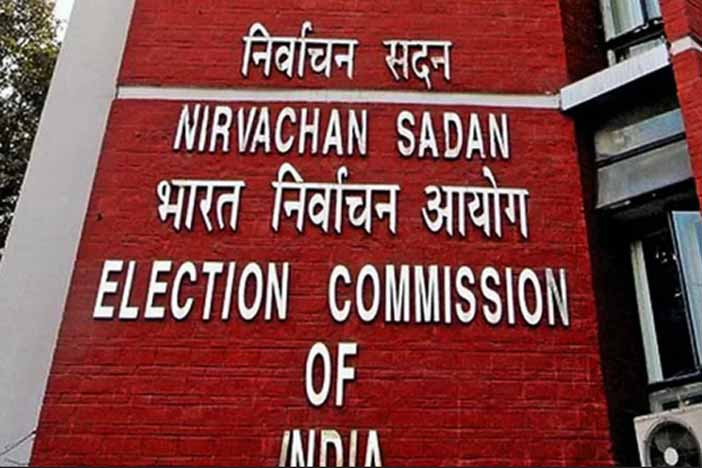
Election Commission of India.
Aadhaar Card Not Proof of Citizenship, Election Commission Informs Supreme Court: New Delhi, India – The Election Commission of India (ECI) on Thursday, July 10, informed the Supreme Court that an Aadhaar card cannot be considered proof of citizenship. This assertion came during the hearing of petitions challenging the “Special Intensive Revision (SIR)” of Electoral Rolls in Bihar, a process that has sparked significant debate and legal scrutiny.
The controversy centers on the ECI’s decision to exclude both Aadhaar cards and Voter IDs from the list of eleven documents deemed acceptable as proof of citizenship for individuals not present on the 2003 electoral roll. Petitioners, including several prominent Members of Parliament from various opposition parties, have questioned the ECI’s rationale behind this exclusion, arguing it could disenfranchise legitimate voters.
Senior Advocate Gopal Sankaranarayanan, representing one of the petitioners, highlighted that despite the Representation of Peoples Act recognizing Aadhaar as an acceptable document, the ECI has chosen not to accept it for the Bihar SIR. A bench comprising Justice Sudhanshu Dhulia and Justice Joymalya Bagchi pressed the ECI for an explanation regarding the non-acceptance of Aadhaar. In response, Senior Advocate Rakesh Dwivedi, appearing for the Election Commission, unequivocally stated, “Aadhaar Card cannot be used as proof of citizenship.”
READ: Madras High Court Affirms Corporate Debtor’s Right to Propose Interim Resolution Professional

Justice Sudhanshu Dhulia
Justice Dhulia then raised a critical point, noting that the determination of citizenship falls under the purview of the Ministry of Home Affairs (MHA), not the Election Commission. The ECI counsel countered by asserting the Commission’s powers under Article 326 of the Constitution, which pertains to the superintendence, direction, and control of elections.
However, Justice Bagchi expressed reservations about the timing of such an intensive exercise, particularly if it leads to the disenfranchisement of individuals already on the electoral roll just months before a proposed election. “Your decision let us say to disenfranchise the person who is already there on the electoral roll of 2025 would compel this individual to appeal against decision and go through this entire rigmarole and thereby be denied of his right to vote in the ensuing election,” Justice Bagchi observed. While acknowledging the ECI‘s right to purge electoral rolls of non-citizens, the bench questioned the practicality and potential impact of undertaking such a significant revision so close to an election.
READ: SEBI Slams Jane Street with Market Ban and ₹4,844 Crore Disgorgement Over Alleged Index Manipulation
The petitions challenging the Bihar SIR have been filed by a diverse group of opposition leaders and parties, underscoring the widespread concern over the ECI’s revision methodology.
The petitioners include:
MPs Mahua Moitra (Trinamool Congress)
Manoj Kumar Jha (Rashtriya Janata Dal)
KC Venugopal (Indian National Congress)
Supriya Sule (Nationalist Congress Party – SP)
D Raja (Communist Party of India)
Harinder Malik (Samajwadi Party)
Arvind Sawant (Shiv Sena UBT)
Sarfraz Ahmed (Jharkhand Mukti Morcha)
Dipankar Bhattacharya (Communist Party of India (Marxist-Leninist) Liberation)
Dravida Munnetra Kazhagam.
READ: Veritas Legal Advises Raphe mPhibr on $100 Million Fundraise, Bolstering India’s Defense Tech Sector