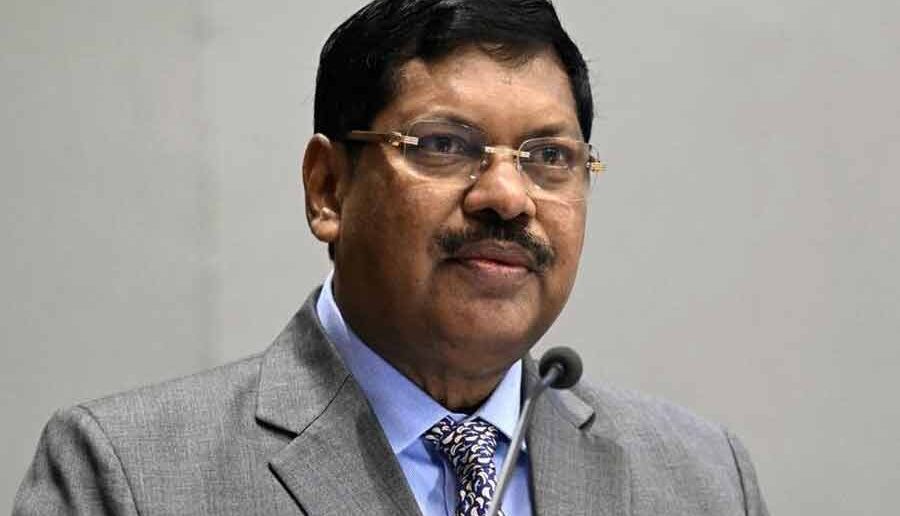
BR Gavai, Former Chief Justice of India.
Mediation Must Move Beyond Elite Legal Spaces: Former CJI BR Gavai: Mumbai, India – Mediation in India must shift from being an elite legal practice to a more inclusive, community-driven approach, former Chief Justice of India BR Gavai urged at the International Mediation and Dispute Resolution Conference 2025, held at DY Patil University, Navi Mumbai, on Saturday.
Justice Gavai, who delivered a keynote address at the conference, stressed the need for mediation to become an accessible and familiar mechanism for resolving disputes, especially for everyday citizens across the country. He emphasized that if mediation remains confined to court complexes or large urban centers, it risks becoming a privilege for the few, rather than a tool available to all.
Mediation Must Be Accessible to All
“Mediation must move out of elite legal spaces and become a common, approachable mechanism for everyday disputes,” Justice Gavai said. He proposed the establishment of community mediation centers that are physically accessible, culturally familiar, and affordable, with some even offering free services to those in need.
The retired judge cautioned that a system where mediation is only available in major cities or within court complexes would not serve the vast majority of the population, especially in rural or remote areas. “Embedding mediation in local communities is essential to ensure it remains a service for the people, not a privilege for the few,” he added.
Justice Gavai pointed out that disputes arise everywhere – from tribal hamlets to peri-urban settlements – and that expecting people from diverse linguistic backgrounds and socio-economic levels to engage in formal mediation in English or Hindi is both unrealistic and unjust. “A farmer in Vidarbha or a forest dweller in Koderma may not speak Hindi or English, and asking them to narrate their grievances in these languages is a form of exclusion,” he said.
The Need for Local Language Mediators
To make the mediation process more democratic and accessible, Justice Gavai called for the creation of a cadre of mediators who are fluent in local languages and dialects. This would ensure that people from various regions can engage with the process in their own vernacular, ensuring a fairer and more inclusive dispute resolution system.
Addressing Bias and Power Dynamics
The former CJI also spoke about the inherent biases and power imbalances present in many mediation situations. “A woman in a matrimonial dispute, a Dalit laborer seeking wages, or a transgender person facing discrimination may face structural disadvantages that undermine their ability to negotiate freely,” he noted.
Justice Gavai suggested that mediators should be specially trained to recognize and mitigate power imbalances, implicit bias, and coercive dynamics in mediation settings. He also proposed safeguards to ensure fairness, such as providing independent legal advice to the parties involved and excluding cases involving violence or intimidation from the mediation process.
“Mediation should not just result in a settlement; it must ensure justice,” he concluded, emphasizing the importance of upholding the integrity of the process.
Defending the Creamy Layer Principle in SC/ST Reservations
In addition to his remarks on mediation, Justice Gavai also spoke at an event organized by Loksatta, the Marathi daily of the Indian Express Group, where he defended his controversial decision to apply the creamy layer principle to the Scheduled Castes and Scheduled Tribes (SC/STs) in India. This principle, which is currently applied to Other Backward Classes (OBCs), identifies more affluent members of certain communities and excludes them from affirmative action benefits like reservations.
In his judgment delivered on August 1, 2024, the Supreme Court called for the identification of a creamy layer among SC/STs, a decision that has stirred debate. Justice Gavai explained that this move would ensure that the benefits of reservation reach only the most disadvantaged members of the SC/ST communities.
“I have faced criticism from people within my own community regarding this judgment,” Justice Gavai shared, recounting accusations that he had taken advantage of reservation policies to reach the position of a Supreme Court judge and later advocated for the creamy layer principle. “These allegations stem from a fundamental misunderstanding of constitutional provisions,” he added.
He also addressed accusations that his elevation to the Supreme Court was facilitated by reservation. “The higher judiciary, including the High Court and Supreme Court, operates outside the reservation framework,” he clarified. “There is no reservation for judicial appointments to these positions. Those from the SC/ST categories must compete on equal footing with others to become judges or Chief Justices,” Justice Gavai explained.
Future of Dispute Resolution in India
Justice Gavai’s comments come at a time when India is increasingly looking to modernize its dispute resolution mechanisms. While AI and technology are making strides in the legal field, the former CJI’s emphasis on community-based, language-sensitive mediation offers a more human-centered approach to resolving conflicts.
With his call for more inclusive and people-centric mediation, Justice Gavai has highlighted the need for India’s legal system to evolve in ways that truly serve its diverse population—beyond the walls of courts and legal elites. By creating more accessible avenues for mediation, the judiciary can alleviate the burden on the court system and ensure that justice is available to everyone, regardless of their socio-economic or geographical background.