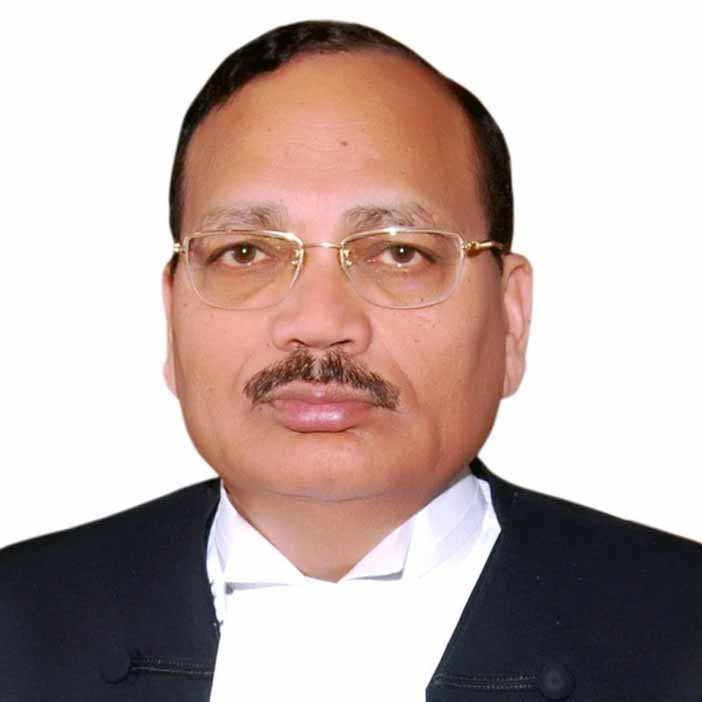
Suryakant, Chief Justice of India.
New Delhi, March 20, 2026 — Chief Justice of India Surya Kant on Friday recused himself from hearing a batch of petitions challenging the law governing the appointment of Election Commissioners, citing the need to avoid any perception of conflict of interest.
A Bench comprising CJI Kant and Justices Joymalya Bagchi and Vipul M Pancholi was scheduled to take up the matter when the Chief Justice made the decision to step aside.
“Should I hear this matter? Somebody may accuse me of conflict of interest,” CJI Kant remarked in open court, signalling concerns over maintaining institutional neutrality.
Concerns over potential conflict
The case pertains to challenges against the Chief Election Commissioner and Other Election Commissioners Act 2023, which lays down the procedure for appointing the Chief Election Commissioner (CEC) and other Election Commissioners.
Petitioners have argued that the law is unconstitutional because it excludes the Chief Justice of India from the selection panel—despite a prior Supreme Court ruling mandating judicial participation in the process.
Senior advocate Prashant Bhushan, appearing for one of the petitioners, suggested that the matter be placed before a Bench that does not include any judge who may be in line to become the next Chief Justice of India.
READ: Supreme Court Designates 7 Retired High Court Judges as Senior Advocates
Bench to be reconstituted
Accepting the suggestion, CJI Kant said the matter should be reassigned to avoid any doubts about impartiality.
“This is what was in my mind. I should mark the matter to a Bench where the judge is not in line to become CJI. Then nobody can say anything,” he observed, adding that he had already considered the issue in advance.
The Court directed that the case be listed on April 7 before a separately designated Bench.
Legal challenge to 2023 Act
At the centre of the controversy is whether the 2023 law contravenes the Supreme Court’s earlier ruling in Anoop Baranwal v. Union of India.
In that landmark judgment, the top court had directed that the appointment of Election Commissioners should be carried out by a committee including the Prime Minister, the Leader of Opposition, and the Chief Justice of India—until Parliament enacted a law on the subject.
However, the 2023 legislation replaced the Chief Justice with a Union Cabinet Minister in the selection panel, effectively removing judicial participation.
READ: “Tribunals Have Become a Liability”: CJI Surya Kant Calls for Structural Overhaul
Previous court stance
The law has already faced judicial scrutiny. In 2024, a Bench led by former Chief Justice Sanjiv Khanna and Justice Dipankar Datta declined to stay the legislation.
The Bench also refused to interfere with the appointments of Election Commissioners Sukhbir Singh Sandhu and Gyanesh Kumar, which were made under the provisions of the 2023 Act.
Constitutional questions remain
The upcoming hearing is expected to revisit key constitutional questions, including the balance of power between the executive and judiciary in electoral appointments, and whether the exclusion of the CJI undermines the independence of the Election Commission.
With the matter now set for April 7 before a newly constituted Bench, the case is poised to become a significant test of institutional safeguards in India’s electoral framework.
READ: ALMT Legal and Rubicon Law Advise on Steel Products AS’ 100% Acquisition of Techcom Precision India