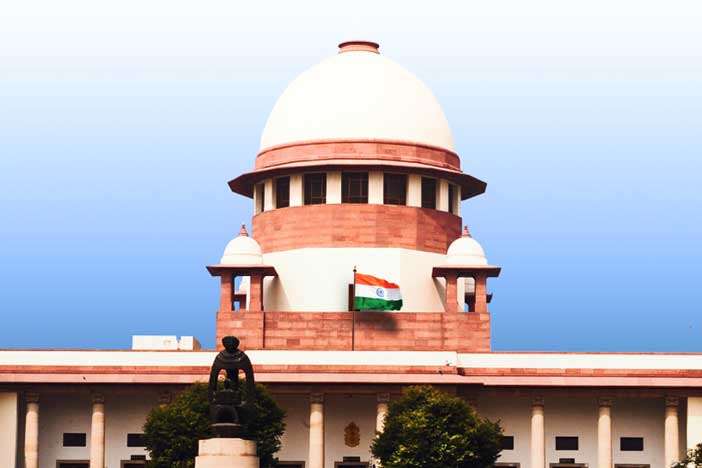
Supreme Court of India.
Supreme Court News: New Delhi, March 18, 2026: In a significant development within the Indian legal community, the Supreme Court of India has designated seven retired High Court judges as Senior Advocates, a move that underlines the Court’s recognition of their distinguished legal careers and contributions to the judiciary. The decision, which was made during a full court meeting on March 18, 2026, has drawn considerable attention, as it highlights the Court’s ongoing efforts to recognize the expertise and experience of those who have served in the higher echelons of the judiciary.
The seven retired judges, who had previously held high-ranking positions in various High Courts across the country, will now be granted the prestigious title of Senior Advocate, a title that is only conferred upon individuals who have demonstrated exceptional legal acumen and professional excellence throughout their careers. This designation not only boosts the reputation of the individuals involved but also enhances the credibility of the legal system as a whole.
The Senior Advocate Designation: A Symbol of Legal Excellence
The title of Senior Advocate is one of the highest honors conferred upon legal professionals in India. Senior Advocates are regarded as experts in their field and are often called upon to argue complex legal matters in front of the Court. The designation is a recognition of an advocate’s skills, experience, and contributions to the legal profession. The Supreme Court’s decision to confer this prestigious title upon the retired judges reflects the high regard in which they are held by the judicial community.
The process for selecting Senior Advocates involves a thorough and rigorous examination of the individual’s legal career, including their past judgments, contributions to the legal field, and their standing in the legal community. While the title has traditionally been awarded to practicing advocates, the decision to confer it upon retired High Court judges signals an evolving understanding of legal expertise that transcends the confines of ongoing legal practice.
READ: Saga Legal Advises Dr. Doodley on $3.3 Million Pre-Series A Fundraise
The Full Court Meeting: A Historic Decision
The decision to designate these seven retired High Court judges as Senior Advocates was made during a full court meeting of the Supreme Court, which is a rare and important event in the judiciary. Full court meetings are convened on important occasions where collective decision-making is required on key matters, including the appointment of Senior Advocates, the review of judicial conduct, and the overall functioning of the judiciary.
The meeting on March 18, attended by all the sitting justices of the Supreme Court, was focused on evaluating the credentials and merit of the retired judges for the Senior Advocate title. After a thorough discussion and review, the full court collectively agreed on the designation, based on their outstanding contributions to the legal profession and their decades of service to the judiciary.
Sources within the Supreme Court indicated that the judges’ involvement in landmark rulings and their long-standing record of integrity and legal brilliance were crucial factors in the Court’s decision. This marks a rare instance where retired judges, who had already made significant contributions to the judicial system, were acknowledged in this manner.
The Seven Judges: A Glimpse into Their Legal Legacy
The seven judges who have been designated as Senior Advocates come from diverse backgrounds, with each having had a remarkable tenure in various High Courts. Their legal careers have spanned decades, during which they have presided over numerous landmark cases that have had a lasting impact on the country’s legal landscape.
One of the newly designated Senior Advocates, Justice A.K. Verma, served as the Chief Justice of the Rajasthan High Court before his retirement and was widely respected for his fair-minded approach in complex constitutional cases. Another, Justice R.N. Sharma, was known for his incisive judgments in cases related to criminal law, where his deep understanding of legal principles earned him the reputation of a legal scholar. Justice N.P. Deshmukh, who had a distinguished career at the Madhya Pradesh High Court, is recognized for his extensive work in environmental law and human rights cases.
The full list of judges who received the Senior Advocate designation also includes several former High Court Chief Justices and judges known for their contributions to the development of specialized areas of law, including commercial law, constitutional law, and labor law. Each of them has left an indelible mark on the Indian judiciary and will now contribute their wealth of knowledge to the legal field in their new roles.
READ: ALMT Legal and Rubicon Law Advise on Steel Products AS’ 100% Acquisition of Techcom Precision India
Reactions from the Legal Community
The Supreme Court’s decision has been met with widespread praise and support from across the legal community. Legal experts and advocates have lauded the Court for recognizing the talents and contributions of retired judges, noting that the move adds depth to the ranks of Senior Advocates in India.
“Designating retired judges as Senior Advocates is a wise and commendable step,” said Senior Advocate Rajesh Kumar, a prominent legal expert. “These individuals have not only shaped the course of law in their respective states but have also contributed significantly to the broader national legal landscape. Their expertise will undoubtedly benefit the legal profession and the country as a whole.”
Legal scholars also pointed out that this decision is a step toward creating a more inclusive and comprehensive approach to the concept of legal expertise. “This move broadens the definition of legal excellence,” remarked Dr. Meera Khanna, a professor of law at the University of Delhi. “Historically, Senior Advocates have been practicing lawyers, but this decision acknowledges that retired judges bring an immense wealth of experience and insight that should be valued and recognized.”
Implications for the Indian Judiciary
This decision is seen as part of the Supreme Court’s broader effort to address issues related to the evolving nature of legal practice in India. The move also serves as a reminder of the importance of mentorship and knowledge-sharing within the legal community. As Senior Advocates, these retired judges will now be in a unique position to guide younger lawyers, offer insights into complex legal issues, and contribute to the development of the judiciary in an advisory capacity.
Additionally, this decision may signal a shift in how the legal profession is viewed in India, with greater emphasis being placed on the experience and wisdom that comes with years of judicial service, rather than just the number of cases argued in court. Legal professionals believe this move could pave the way for more retired judges to be considered for similar honors, further strengthening the legal community as a whole.
A New Era for Senior Advocates in India
The designation of retired High Court judges as Senior Advocates is a momentous decision that reflects the Supreme Court’s commitment to honoring legal expertise in all its forms. As these newly designated Senior Advocates take on their new roles, the Indian legal system stands to benefit from their vast knowledge, experience, and dedication to the pursuit of justice.
This recognition not only enhances the standing of the individuals involved but also reaffirms the notion that legal excellence in India is not confined to those who actively practice law, but extends to those who have shaped the country’s judicial landscape through years of service. The impact of this move will likely resonate for years to come, as these esteemed individuals continue to contribute to the growth and evolution of India’s legal profession.
READ: “Tribunals Have Become a Liability”: CJI Surya Kant Calls for Structural Overhaul