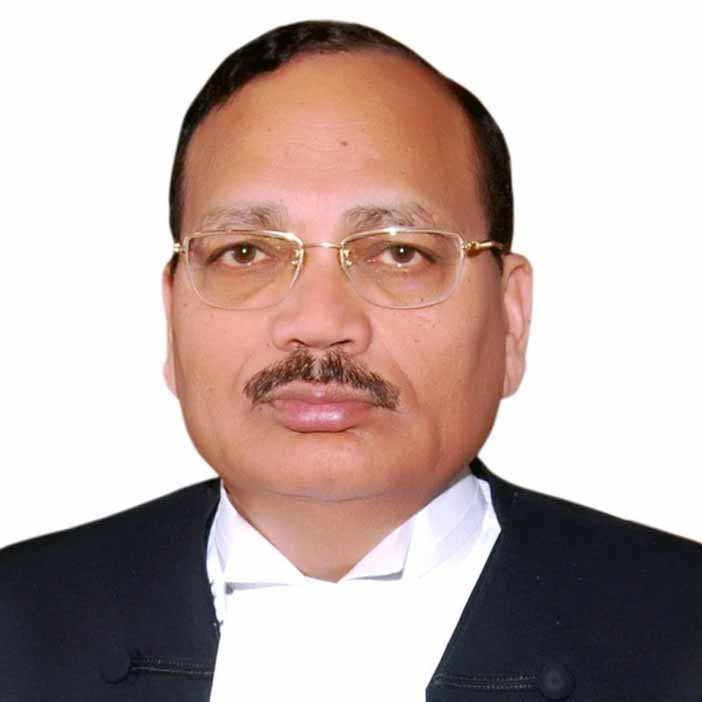
Justice Surya Kant has been named as next CJI.
Justice Surya Kant – Next Chief Justice of India: New Delhi, October 31, 2025 — In a significant development on Thursday, the Central government officially cleared the appointment of Supreme Court Justice Surya Kant as the next Chief Justice of India (CJI). The appointment will take effect from November 24, 2025, following the retirement of the current CJI, BR Gavai, on November 23.
The announcement was made by Union Law Minister Arjun Ram Meghwal on X (formerly Twitter), who stated, “In exercise of the powers conferred by the Constitution of India, the President is pleased to appoint Shri Justice Surya Kant, Judge of the Supreme Court of India, as the Chief Justice of India with effect from 24th November 2025. I convey my heartiest congratulations and best wishes to him.”
The appointment comes after a recommendation from the incumbent CJI, BR Gavai, earlier this week. Justice Gavai’s recommendation was based on the established seniority system in the Indian judiciary, which advocates that the senior-most judge of the Supreme Court be appointed to the top judicial post.
Justice Surya Kant, who was elevated to the Supreme Court on May 24, 2019, will serve as the Chief Justice of India for a relatively long tenure of over 14 months, until his retirement in February 2027. His tenure promises to be marked by significant decisions, as the CJI plays a crucial role in overseeing the administration of the highest court and influencing key legal precedents.
A Long and Distinguished Judicial Career
Born on February 10, 1962, in Hisar, Haryana, Justice Kant hails from a middle-class family. He completed his undergraduate studies at Government Post Graduate College, Hisar, in 1981, and went on to earn his law degree from Maharishi Dayanand University in Rohtak in 1984.
Justice Kant began his legal career in 1984 at the Hisar District Court before moving to the Punjab and Haryana High Court in 1985. In recognition of his legal acumen, he was designated a Senior Advocate in March 2001. He served as the Advocate General of Haryana before being appointed as a permanent judge to the Punjab and Haryana High Court on January 9, 2004.
His judicial journey took another leap in October 2018, when he was appointed as the Chief Justice of the High Court of Himachal Pradesh, a position he held until his elevation to the Supreme Court in May 2019.
READ: Alimony can’t be awarded to financially independent spouse: Delhi High Court
Justice Surya Kant’s Tenure in Supreme Court
Justice Kant’s appointment to the Supreme Court, though relatively recent, has seen him build a reputation as a capable and fair judge. His tenure as Chief Justice of Himachal Pradesh was noted for his efficient management of judicial proceedings and his commitment to ensuring timely justice delivery.
Justice Kant’s appointment as CJI brings with it the promise of a steady hand guiding the nation’s highest court through some of the most complex legal and constitutional issues. Given his extensive experience in both state and national judicial systems, many observers are hopeful that he will continue to steer the Supreme Court toward greater efficiency and transparency.
READ: Supreme Court Expresses Disappointment Over 8.8 Lakh Pending Execution Petitions Across India
Justice Surya Kant’s long tenure as CJI — lasting until his retirement in February 2027 — provides him with an opportunity to leave a lasting impact on the judiciary. It remains to be seen how he will address pressing issues such as judicial reforms, access to justice, and the growing caseload in India’s courts.
Justice Kant’s ascent to the highest judicial office is a momentous occasion, not only for his personal career but also for the continued evolution of the Indian judicial system. His appointment is expected to further strengthen the credibility of the Supreme Court and inspire confidence in the public regarding the independence and integrity of the judiciary.
READ: Supreme Court Clarifies Distinction Between Murder and Attempt to Murder: Why the Ruling Matters