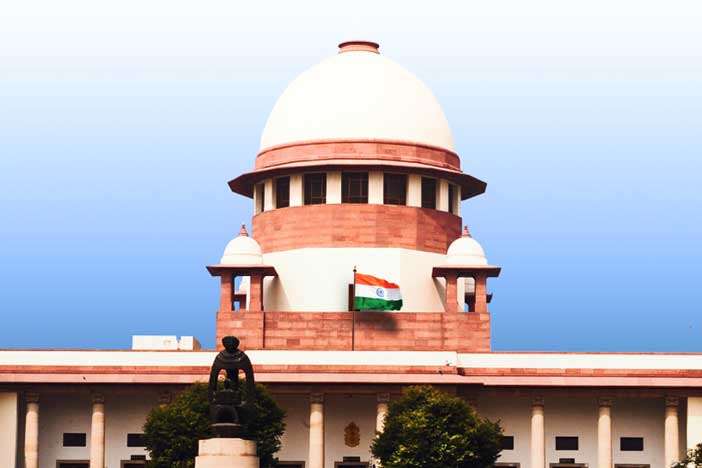
Supreme Court of India.
Supreme Court Justice Manmohan on Arbitration: New Delhi: Supreme Court Justice Manmohan recently raised concerns about the evolving nature of arbitration in India, stating that it is increasingly mirroring court proceedings and undermining its original objective of providing a quicker, cost-effective alternative to litigation. Speaking at the Legal Conclave & Awards Ceremony 2026, organised by the Society of Indian Law Firms (SILF) and the Society of Legal Professionals (SLP), Justice Manmohan highlighted that arbitration, which was meant to be informal and inexpensive, has grown to resemble formal court procedures.
Arbitration Should Be Informal and Cost-Effective, Justice Manmohan Says
Justice Manmohan pointed out that the way arbitral proceedings are conducted today has led to concerns that arbitration is losing its intended purpose. “Arbitral proceedings were meant to be informal and inexpensive. It was supposed to have sensitivity. I think we have taken out the sensitivity aspect from arbitration,” he said, emphasizing that the introduction of practices such as marking documents in arbitration—especially when there is no dispute about the validity of those documents—adds unnecessary complexity to the process.
The Justice called for a debate within the legal community about whether arbitration, which was initially seen as a solution to the delays and costs associated with traditional court proceedings, has instead become a problem. “Why has arbitration become a replica of court proceedings?” he asked, highlighting the growing concern over this issue.
Justice System Reforms and the Need for Academic Engagement
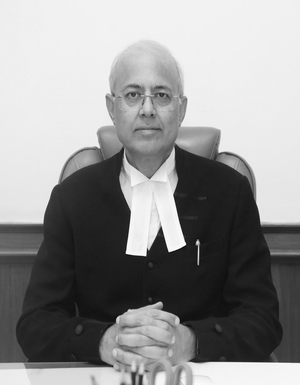
Justice Manmohan, Supreme Court of India.
Justice Manmohan stressed the importance of addressing the shortcomings within the justice system, not to condemn it, but to improve it. He called for a more robust engagement with academia and global legal discourse to learn from the experiences of other jurisdictions, especially when it comes to emerging challenges like the impact of technology on the judicial system and the evolving role of judges.
His comments came in the context of broader discussions on reform, with the Justice noting that legal systems worldwide are grappling with similar issues, and India is no exception. He also pointed out the need for more significant dialogue to modernise and improve the system.
Mediation: An Effective Tool for Dispute Resolution
In his address, Justice Manmohan also underscored the importance of mediation as an effective means of dispute resolution. He pointed out that mediation could help resolve not just individual cases, but also wider societal issues. “When you resolve matrimonial matters, you do not resolve just one family dispute. You resolve at least ten or twelve proceedings,” he explained, highlighting the broader impact of resolving conflicts through mediation.
Justice Manmohan also touched upon the role of technology in the legal system, noting that while technology must be leveraged as an enabler, it should not replace human decision-making. “The ultimate decision must rest with the human mind,” he affirmed, emphasising the need for human judgment in legal matters.
READ: “Marital Status Irrelevant for Protection of Live-In Couples, Says Delhi High Court”
Call for Greater Reliance on Mediation and Consensual Mechanisms
In a related discussion, Additional Solicitor General Chetan Sharma echoed Justice Manmohan’s remarks on the scale of pendency in India’s courts. He called for greater reliance on mediation and other consensual mechanisms to address the backlog of cases in the judicial system, which continues to be a major concern.
Rising Arbitration Costs: A Growing Concern
Lalit Bhasin, Chairman of the Conclave and President of SILF, highlighted the increasing costs of arbitration as a critical issue, stressing the need to make justice more accessible and affordable. He pointed out that the rising costs of arbitration are undermining its original purpose and making it less accessible to those who need it most.
Book Launch and Recognition of Women Leaders in Law
The event also saw the release of a book titled Economic Justice and Public Finance for Social Change: An Appraisal in the Light of Dr Ambedkar’s Vision, edited by Prof. (Dr.) Vijay Kumar Singh. The conclave also featured a segment called “Recognising Nari Shakti – Women Power,” which honoured women leading top law firms in India. These women were presented plaques of honour for their leadership and contributions to the legal profession.
The conclave concluded with an awards ceremony, recognising excellence across various areas of the legal profession.