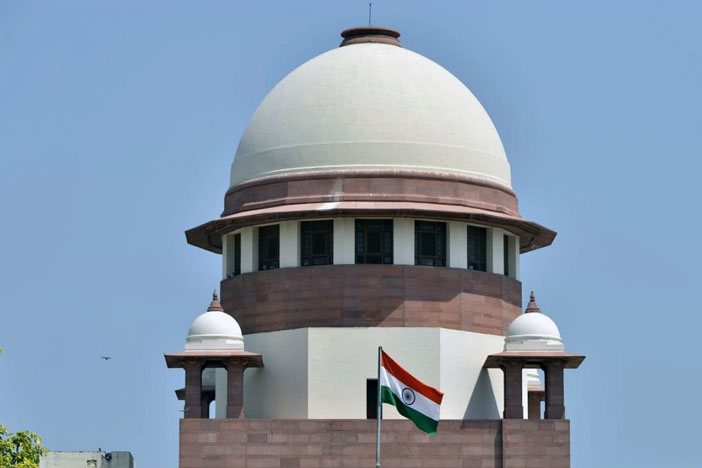
Supreme Court of India.
Supreme Court Guidelines on Oral Arguments by Advocates: New Delhi: In a significant move aimed at streamlining judicial proceedings, the Supreme Court has introduced a new Standard Operating Procedure (SOP) mandating lawyers to specify in advance the time they intend to take for oral arguments and to adhere strictly to those timelines.
The new procedure will apply to all post-notice and regular hearing matters and is intended to improve court efficiency, case management and the equitable distribution of working hours among benches. The SOP was notified through a circular dated December 29, issued under the directions of Chief Justice of India (CJI) Surya Kant.
Under the new framework, Senior Advocates and arguing counsel are required to indicate the duration of their oral submissions in advance. These timelines must be submitted through the Supreme Court’s online appearance slip portal at least one day prior to the scheduled hearing.
According to the circular, the measure is designed to promote “effective court management and equitable distribution of court working hours,” while also ensuring the “speedy and proper administration of justice.”
In addition to advance intimation of argument duration, the SOP makes it mandatory for all arguing counsel and Senior Advocates to file concise written submissions. These written notes, limited to a maximum of five pages, must be submitted at least three days before the date of hearing.
READ: ‘Sar tan se juda’ slogan challenges India’s integrity, incites rebellion: Allahabad High Court
The submissions are to be filed through the Advocate-on-Record or a nodal counsel appointed by the Court, after serving a copy on the opposite party. The Court emphasised that the written notes are meant to assist the Bench in understanding the core issues and arguments before the matter is taken up for oral hearing.
“All counsel shall strictly adhere to the timelines fixed and conclude their oral arguments,” the circular stated, underlining that compliance with the prescribed time limits will be expected as a matter of discipline and professional responsibility.
READ: Punjab and Haryana High Court seeks response from judge accused of granting bail to relative
The introduction of pre-fixed time slots for arguments is expected to help Supreme Court benches plan their daily proceedings more effectively and allow a larger number of cases to be heard and disposed of each day. The move also seeks to address long-standing concerns about delays caused by prolonged oral arguments in complex matters.
Legal observers see the SOP as a step towards modernising court processes and aligning the Supreme Court’s functioning with best practices in judicial time management, while balancing the need for thorough advocacy with the imperative of timely justice.
READ: Explained: Why the Supreme Court Ruled That Not Every Lawyer Is an Advocate