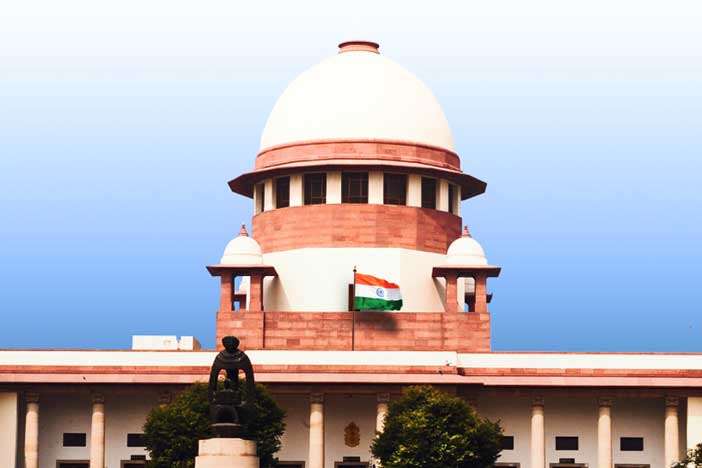
Supreme Court of India.
Supreme Court Unnao Rape Case Kuldeep Singh Sengar: New Delhi: The Supreme Court will hold a special sitting during its winter vacation on December 29 to hear the Central Bureau of Investigation’s (CBI) appeal challenging the suspension of the life sentence granted to former Uttar Pradesh MLA Kuldeep Singh Sengar in the Unnao rape case.
A three-judge vacation Bench comprising Chief Justice of India Surya Kant and Justices J.K. Maheshwari and Augustine George Masih will hear the matter. The top court is currently closed for its winter break and is scheduled to resume regular sittings only on January 5.
Sengar was convicted by a Delhi trial court in December 2019 for offences under the Indian Penal Code and the Protection of Children from Sexual Offences (POCSO) Act, and was sentenced to imprisonment for the remainder of his natural life.
READ: Supreme Court takes suo motu cognisance of Aravalli Hills definition, hearing on December 29
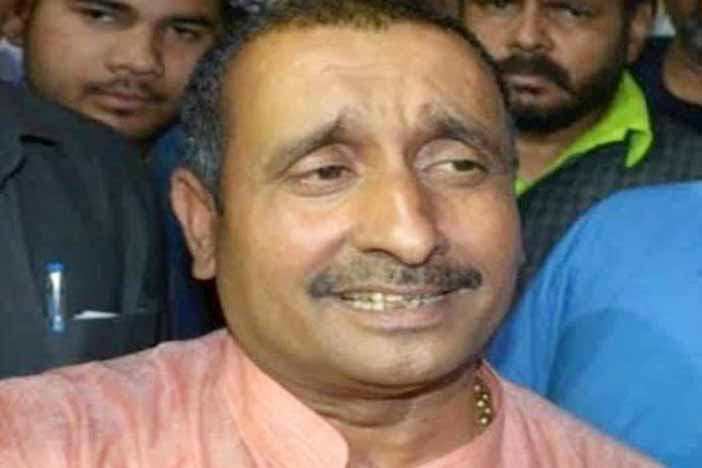
Kuldeep Singh Sengar, Former MLA.
READ: How Impeachment of Judges Works in India — Process, History, and the Latest Cases
The CBI has approached the apex court against the Delhi High Court’s December 23 order suspending the life sentence awarded to Sengar. The High Court had granted him relief after recording a prima facie finding that the offence of aggravated penetrative sexual assault under the POCSO Act was not made out against him.
Under Section 5 of the POCSO Act, penetrative sexual assault is treated as “aggravated” if committed under certain circumstances, including by a public servant or a person holding a position of trust or authority. Such an offence attracts a minimum punishment of 20 years’ imprisonment, which may extend to life.
The trial court had convicted Sengar for aggravated penetrative sexual assault on the ground that he fell within the definition of a “public servant.” However, a Division Bench of the Delhi High Court comprising Justices Subramonium Prasad and Harish Vaidyanathan Shankar held that Sengar could not be categorised as a public servant under Section 5(c) of the POCSO Act or under Section 376(2)(b) of the Indian Penal Code. The High Court also ruled that he did not fall within the scope of Section 5(p) of the POCSO Act, which applies to persons in a “position of trust or authority.”
Challenging this interpretation, the CBI has argued before the Supreme Court that the High Court erred in law by failing to adopt a purposive interpretation of the POCSO Act, which is a special, victim-centric legislation. According to the agency, a sitting MLA occupies a constitutional position of trust and authority and discharges public duties in which the State and society have a direct interest.
The CBI has further raised concerns over the safety of the survivor and her family, stating that Sengar is an influential individual and that his release during the pendency of the appeal could jeopardise their security and undermine public confidence in the justice delivery system.
The Supreme Court’s decision on the CBI’s plea is expected to have significant implications for the interpretation of aggravated sexual offences under the POCSO Act and the standards for suspension of sentence in serious criminal cases.
READ: Punjab and Haryana High Court seeks response from judge accused of granting bail to relative