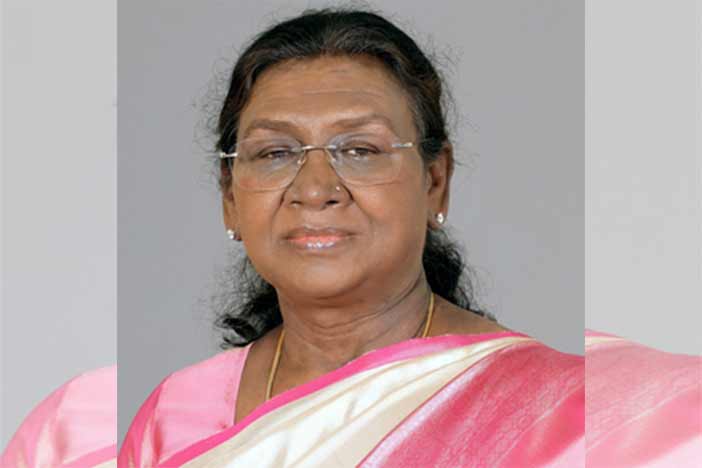
Droupadi Murmu, President of India.
NEW DELHI — In a swift legislative maneuver aimed at tackling the relentless pendency of cases in India’s highest judiciary, President Droupadi Murmu has promulgated a major constitutional ordinance. The directive officially increases the sanctioned strength of the Supreme Court from 34 to 38 judges, marking the first structural expansion of the apex court’s bench in seven years.
The Supreme Court (Number of Judges) Amendment Ordinance, 2026, was formally notified in the Gazette of India on May 16, 2026. The executive intervention comes on the heels of a Union Cabinet approval granted on May 5, signaling the government’s urgency in addressing the judicial bottleneck while Parliament is in recess.
The Numbers Game: 37 Plus One
The freshly minted ordinance directly amends Section 2 of the Supreme Court (Number of Judges) Act, 1956. By substituting the statutory word “thirty-three” with “thirty-seven,” the executive has effectively carved out four brand-new seats on the top court’s bench.
Total Sanctioned Strength: 38
┌──────────────────────────────────────────────┐
│ Chief Justice of India (1) │
├──────────────────────────────────────────────┤
│ Other Sanctioned Judges (37) │
└──────────────────────────────────────────────┘
The mathematical shift breaks down as follows:
Previous Cap: 33 judges, excluding the Chief Justice of India (CJI), bringing the maximum functional total to 34.
New Cap: 37 judges, excluding the CJI, expanding the maximum operational court capacity to 38 judges.
While the ordinance successfully establishes the legal infrastructure for these four additional posts, the actual seats will not be filled overnight. The power to nominate individuals to these coveted vacancies remains strictly within the purview of the established, judiciary-led Supreme Court Collegium system.
READ: Section 138 NI Act Applies Only to Drawer of Cheque, Not Joint Account Holder: Allahabad HC
The Article 123 Route: Why an Ordinance?
The decision to utilize an ordinance rather than standard parliamentary legislation highlights the pressing nature of judicial backlogs. The President invoked Article 123 of the Constitution of India, an extraordinary provision that grants the executive the power to promulgate laws when both Houses of Parliament are not actively in session and immediate action is deemed necessary.
How the Strength of the Supreme Court is Altered:
[Article 124(1): Parliament must prescribe the size of the court]
│
▼
[Parliament Not In Session] ➔ [Cabinet Proposes Expansion] ➔ [President Invokes Article 123] ➔ [Ordinance Issued]
This bypass is temporary but carries the full weight of an Act of Parliament. It will require formal ratification by lawmakers once the next parliamentary session commences.
READ: Viral Video Spurs Supreme Court Action Against Alleged Misconduct of Andhra Pradesh HC Judge
A Historic Evolution: From Single Digits to 38
The expansion highlights the massive trajectory of growth India’s apex court has undergone to keep pace with a booming population and an increasingly litigious society. Under Article 124(1) of the original 1950 Constitution, the Supreme Court was envisioned as a compact, eight-member body:
“There shall be a Supreme Court of India consisting of a Chief Justice of India and, until Parliament by law prescribes a larger number, of not more than seven other Judges…”
Over the last 76 years, Parliament has repeatedly been forced to scale up the numbers to keep the machinery of justice moving:
The Pendency Problem: Will More Judges Suffice?
The primary catalyst for this executive order is the staggering volume of unresolved litigations clogging the Supreme Court’s dockets. While creating four new judicial desks is a much-needed structural upgrade, legal experts point out that the expansion is only half the battle.
The ultimate efficacy of this expansion now hinges on the speed and consensus of the Supreme Court Collegium in vetting, selecting, and appointing the legal minds destined to fill these empty chairs.
Don’t Miss: Striking Off Tenant’s Defence Under Order XV Rule 5 CPC Not Automatic: Supreme Court