Justice Sandeep Jain clarifies that vicarious liability under Section 141 NI Act applies only to companies and firms, not private individuals.

Allahabad High Court.
Prayagraj, May 24, 2026 — In a significant ruling clarifying the scope of criminal liability under the Negotiable Instruments (NI) Act, the Allahabad High Court has held that a joint account holder who has not signed a dishonoured cheque cannot be prosecuted under Section 138 of the NI Act.
Delivering the judgment on May 6, 2026, Justice Sandeep Jain observed that criminal liability in cheque dishonour cases rests primarily with the “drawer” or signatory of the cheque and cannot be extended merely because an individual jointly holds the bank account.
The court emphasized that the principle of vicarious liability under Section 141 of the NI Act applies only to companies, firms, or recognized business associations and not to private individuals operating a joint account.
“It is only the drawer of the cheque who can be prosecuted,” the court observed, adding that a non-signatory joint account holder cannot be roped into criminal proceedings under Section 138.
Loan Dispute Led to Criminal Complaint
The case arose from a complaint filed by Hari Om Pathak, who alleged that he had advanced a loan of ₹8 lakh to Rahul Thind. According to the complaint, Thind later issued two cheques from a joint bank account maintained with co-account holder Madhu Singh.
The cheques were subsequently dishonoured after the account was found closed, prompting the trial court to summon both Rahul Thind and Madhu Singh under Section 138 of the NI Act.
Madhu Singh challenged the proceedings before the High Court under Section 482 of the Criminal Procedure Code, arguing that she was not a signatory to either cheque and therefore could not be prosecuted.
READ: BCI Seeks Records on Mamata Banerjee’s Advocate Status After High Court Appearance in Lawyer’s Robes
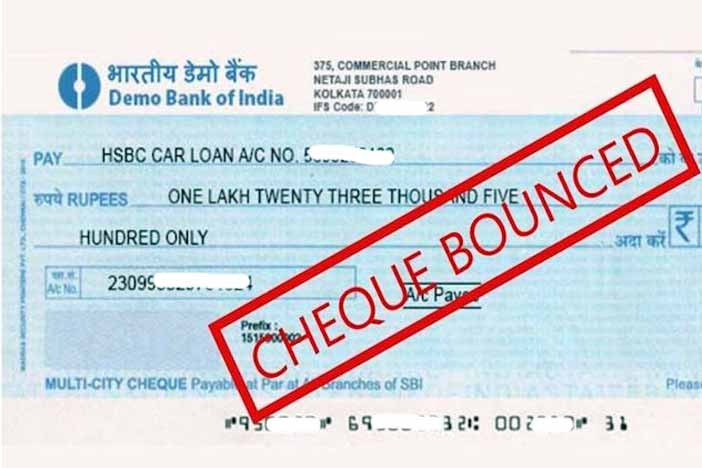
Cheque Bounce Cases.
Court Rejects Extension of Criminal Liability
Examining the provisions of Section 138, the High Court relied on the Supreme Court’s ruling in Jugesh Sehgal v. Shamsher Singh Gogi, which laid down the essential ingredients required to constitute an offence under the NI Act.
The bench noted that the statute specifically refers to the person who “draws” the cheque, making the signatory solely responsible for criminal liability arising from dishonour.
Justice Jain stressed that penal statutes must be interpreted strictly and reiterated that criminal liability cannot be imposed vicariously unless expressly provided by law.
The court also rejected the complainant’s argument that Section 141 of the NI Act could be invoked against private individuals by treating them as an “association of individuals.”
Relying on the Supreme Court judgment in Alka Khandu Avhad v. Amar Syamprasad Mishra, the High Court clarified that Section 141 applies only to corporate entities, partnership firms, and recognized business associations.
“Two private individuals cannot be said to be ‘other association of individuals’,” the court held.
Supreme Court Precedent Reinforced
The High Court further referred to the Supreme Court’s ruling in Aparna A. Shah v. Sheth Developers Pvt. Ltd., where it was similarly held that non-signatory joint account holders cannot face prosecution in cheque bounce cases.
The bench observed that while civil liability to repay a loan may exist jointly, such liability does not automatically translate into criminal culpability under the NI Act.
Importantly, the court noted that no overt act or specific allegation had been attributed to Madhu Singh apart from her status as a joint account holder.
Proceedings Quashed Against Co-Account Holder
Invoking its inherent powers under Section 482 CrPC, the High Court ruled that continuing criminal proceedings against Madhu Singh would amount to an abuse of the legal process.
The court subsequently quashed the summoning order and all proceedings against her in Complaint Case No. 958 of 2006, while allowing the trial to continue against Rahul Thind, the signatory to the dishonoured cheques.
The ruling is expected to have significant implications for cheque dishonour litigation by reinforcing that prosecution under Section 138 of the NI Act is confined to the cheque’s signatory unless specific statutory provisions create vicarious liability.
Don’t Miss: Supreme Court Takes Cognisance of Andhra Pradesh HC Judge’s Conduct Towards Young Lawyer
Don’t Miss: High Courts Cannot Reassess Evidence Under Article 227, Rules Supreme Court in NICE Land Dispute
- Court says criminal liability for cheque dishonour cannot be extended to non-signatory joint account holders.
- Justice Sandeep Jain clarifies that vicarious liability under Section 141 NI Act applies only to companies and firms, not private individuals.
- Proceedings against woman co-account holder quashed after court finds she neither signed the cheque nor played any role in issuance.