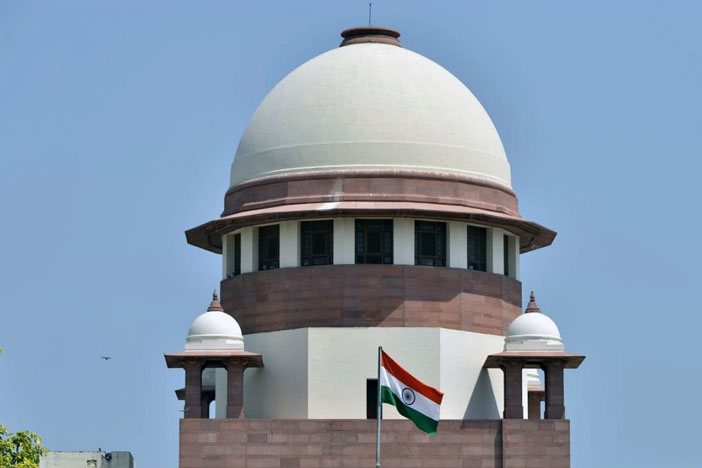
Supreme Court of India.
The Supreme Court has ruled that an accused acquires an indefeasible right to default bail under Section 167(2) of the Criminal Procedure Code if the investigating agency fails to file the chargesheet within the statutory period and any extension is granted without complying with mandatory procedural safeguards.
A bench comprising Justice Vikram Nath and Justice Sandeep Mehta was hearing a case in which an accused under the Unlawful Activities Prevention Act (UAPA) was denied default bail after the investigation agency was granted an additional 25 days beyond the initial 90-day period to file the chargesheet—without giving the accused an opportunity to be heard.
Case Background: Chargesheet Filing Extensions Contested
The matter arose from an FIR registered on November 7, 2023. The appellant was arrested and remanded to judicial custody on November 8, 2023. As the statutory 90-day period for filing the chargesheet neared completion, the investigating agency filed an application on February 2, 2024, seeking a 25-day extension under Section 43-D(2) of the UAPA.
The Special Judge granted the extension, but the accused was neither physically nor virtually produced before the court, nor informed that the application was under consideration. No opportunity of hearing was provided, and the extension order merely recorded that the investigation was still ongoing, mechanically allowing more time.
Subsequently, on February 8, 2024, after the expiry of the original 90-day period, the appellant filed an application seeking default bail under Section 167(2) CrPC. The chargesheet was eventually filed on May 2, 2024, after several further extensions.
READ: Supreme Court Clarifies Limits of High Courts’ Powers Under Article 227, Restores Compensation Award
High Court Decision Overturned
The Jharkhand High Court had dismissed the appellant’s challenge, holding that since the chargesheet was filed within the “extended period,” the right to default bail no longer applied. Aggrieved, the accused approached the Supreme Court.
Setting aside the High Court’s ruling, the bench noted that the order granting the extension was vitiated because no hearing was provided to the accused and the trial court failed to apply its judicial mind.
“It may be reiterated that the learned Special Judge neither provided any opportunity to the appellant to oppose the prayer for extension of time to file the chargesheet nor applied judicial mind while allowing it. In an absolutely mechanical manner, the learned Special Judge recorded the prayer of the public prosecutor and casually extended the period for filing the chargesheet by 25 days. Hence, the order is grossly illegal, arbitrary, and violative of the fundamental right of liberty of the appellant under Article 21 of the Constitution of India,” the Supreme Court observed.
READ: Arbitration Risks Becoming Just Like Court Proceedings, Says Supreme Court Justice Manmohan
Right to Default Bail Crystallized
The Court emphasized that if the investigation is not completed within the statutory period, the accused gains an indefeasible right to default bail. Any direction to extend the chargesheet filing period without due consideration encroaches on personal liberty.
“In view of the fact that the order dated February 2, 2024, extending the time for completion of investigation has been held illegal, and since the chargesheet was filed well after the 90-day period, the appellant’s right to claim default bail stood crystallized upon filing the application under Section 167(2) CrPC,” the bench held.
Accordingly, the Supreme Court allowed the appeal and directed that the petitioner be released on bail.
Cause Title: Md. ARIZ HASNAIN @ ARIZ HASNAIN v. State of Jharkhand
Legal Representation:
For Petitioner(s): Advocate Mr. Abhinav Sekkhri, Advocate Ms. Mehaak Jaggi, Advocate Mr. Ragini Nagpal, Advocate Mr. Shailesh Poddar
For Respondent(s): Advocate Mr. Rajiv Shankar Dvivedi, Standing Counsel; Advocate Ms. Tulika Mukherjee, Advocate Mr. Beenu Sharma, Advocate Mr. Venkat Narayan.
READ: “Marital Status Irrelevant for Protection of Live-In Couples, Says Delhi High Court”