Delhi High Court says OSA does not bar electronic recording of evidence if adequate safeguards are in place.
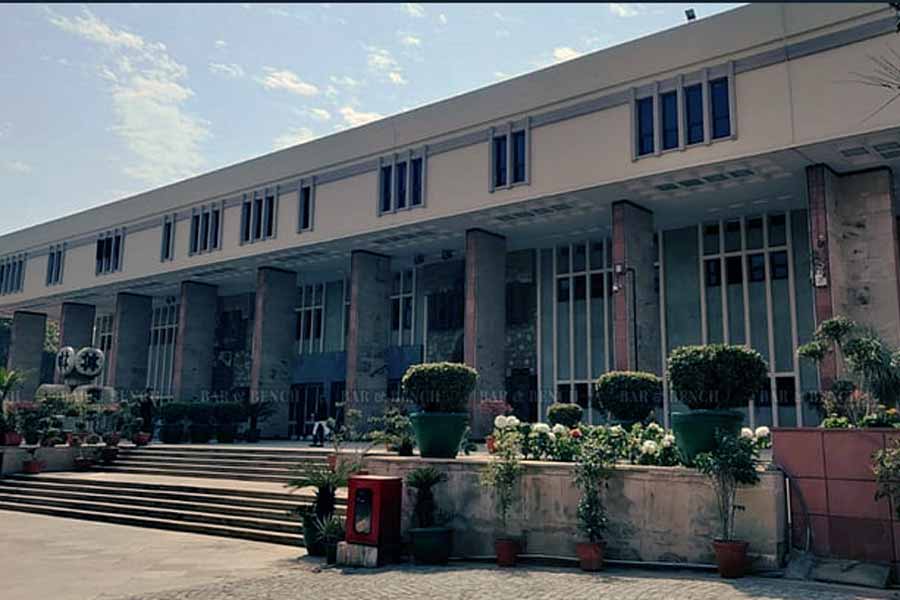
Delhi High Court.
New Delhi, October 29, 2025: In a significant ruling balancing national security concerns with fair trial principles, the Delhi High Court has allowed the Central Bureau of Investigation (CBI) to record the testimony of American businessman C. Edmonds Allen via video conferencing from the Indian Consulate in New York in a case registered under the Official Secrets Act (OSA) against arms dealer Abhishek Verma.
Justice Sanjeev Narula, who delivered the judgment in Central Bureau of Investigation v. Abhishek Verma & Ors., set aside a trial court’s order that had denied the CBI’s request to examine Allen remotely. The trial court had earlier reasoned that permitting virtual testimony might risk the disclosure of classified information and required the accused’s consent under procedural rules.
Overruling this, Justice Narula clarified that the OSA does not prohibit trials or recording of evidence through electronic means, provided adequate safeguards are implemented.
“While the apprehension recorded by the Trial Court, that the use of video conferencing may occasion leakage of classified material, cannot be dismissed as fanciful, yet the answer in law is not prohibition but regulation,” the Court observed.
“OSA does not interdict the conduct of trials; it prescribes the manner in which sensitive proceedings are to be held. The proper judicial response is therefore to manage risk, while preserving the integrity of the proceeding.”
READ: Alimony can’t be awarded to financially independent spouse: Delhi High Court
The case dates back to 2012, when the CBI registered a case against Verma for allegedly possessing classified documents from the Ministry of Defence, including Air Force acquisition plans and Defence Acquisition Council meeting minutes. The probe began after Allen, Verma’s former attorney in the United States, wrote to the then Defence Minister and shared sensitive documents he claimed were sent by Verma.
The High Court took note of Allen’s age (79 years) and his cardiac and orthopaedic ailments, along with reported security threats, concluding that travel to India would be unsafe. Calling these “compelling equities,” Justice Narula said that permitting video testimony from the Indian Consulate would strike a “right balance between protecting national security and ensuring fair trial.”
READ: Gujarat High Court Rules NCLT President Has No Power to Shift Cases Across Benches
Invoking Rule 18 of the Delhi High Court Video Conferencing Rules, 2020, the Court also waived the requirement of the accused’s consent for virtual testimony. However, it directed that the testimony be conducted in camera through a secure, encrypted connection, with all classified documents retained in court custody.
Senior Advocate Maninder Singh, along with advocates Dinhar Takiar, Sanjana Nair, Anurupita Kaur, Mudit Maruah, and Karan Tomar, represented Abhishek Verma. Advocates Sarim Naved and Zeeshan Ahmad appeared for one of the respondents, while advocates Harshvardhan Jha and Aman Pathak represented C. Edmonds Allen.
The ruling is seen as a forward-looking affirmation that technological tools can coexist with secrecy laws, provided courts maintain strict procedural safeguards.
READ: Madras High Court Recognizes Cryptocurrency as Property