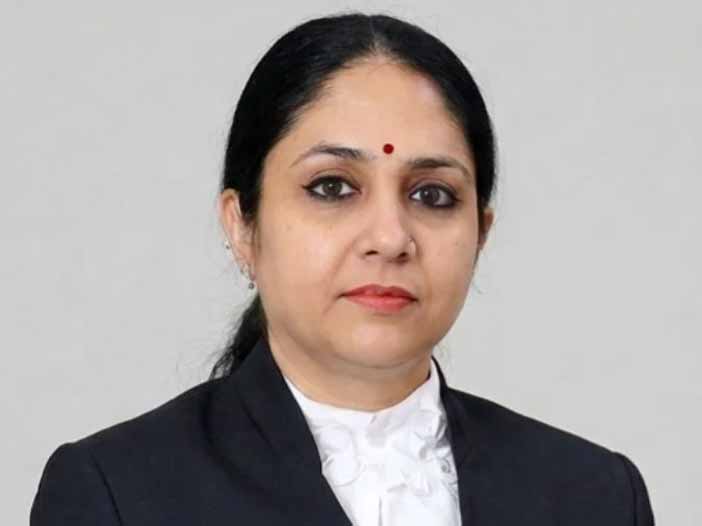
Justice Swarna Kanta Sharma of Delhi High Court.
NEW DELHI — In a dramatic escalation of the legal battle surrounding the Delhi excise policy case, Justice Swarana Kanta Sharma of the Delhi High Court on Thursday initiated criminal contempt of court proceedings against Delhi Chief Minister Arvind Kejriwal, former Deputy CM Manish Sisodia, MLA Durgesh Pathak, and other senior Aam Aadmi Party (AAP) figures.
However, the judge finally decided not to hear the Excise Policy Case Appeal filed by the Central Bureau of Investigation (CBI) against the discharge of Arvind Kejriwal and other Aam Aadmi Party leaders by a special court in New Delhi.
The judge, visibly firm during the proceedings, cited an “extremely vilifying” and “defamatory” campaign targeting both her personal character and the integrity of the judiciary.
A “Premeditated” Campaign of Defamation
The proceedings began on a somber note. Justice Sharma, who was scheduled to appoint amicus curiae (friends of the court) to represent the AAP leaders who had recently refused legal representation, revealed that her decision to pursue contempt was a direct response to coordinated social media attacks and public statements.
“Extremely vilifying, extremely contemptuous, and defamatory material is being posted by some of the respondents against me and against this court,” Justice Sharma remarked. “I cannot stay silent. I have decided to draw contempt proceedings against some of the respondents and some other contemners.”
The Court highlighted a specific instance involving a video of the judge delivering a lecture at a university in Varanasi. According to the Court, the video was edited and falsely projected to cast aspersions on her neutrality. Justice Sharma noted that even fact-checking organizations and the university itself had clarified that the footage was manipulated to spread misinformation.
READ: Bar Council of India Probes Mamata Banerjee’s Legal Practice Status After Court Appearance
The Findings of the Court
In a detailed oral observation, Justice Sharma broke down the actions she deemed to be in violation of the Contempt of Courts Act:
Arvind Kejriwal: The Court noted that the Chief Minister’s public assertions—questioning the judge’s relationship with a political party without factual basis—went beyond fair criticism. “By publicly asking what relationship a sitting judge… has with a political party… is no manner fair criticism of a judicial proceeding,” the Court stated.
Saurabh Bharadwaj & Vinay Mishra: The Court referred to videos posted by AAP state president Saurabh Bharadwaj and social media posts by Vinay Mishra. These allegations, the Court found, had a clear “tendency to scandalize” the judiciary.
Manish Sisodia & Durgesh Pathak: The Court found that letters and content posted by Sisodia and Pathak followed a similar contemptuous pattern.
“This contempt order is not born out of any anger or disrespect, but because of the actions of the contemnors,” Justice Sharma clarified.
READ: Supreme Court Clarifies Limits of High Courts’ Powers Under Article 227, Restores Compensation Award
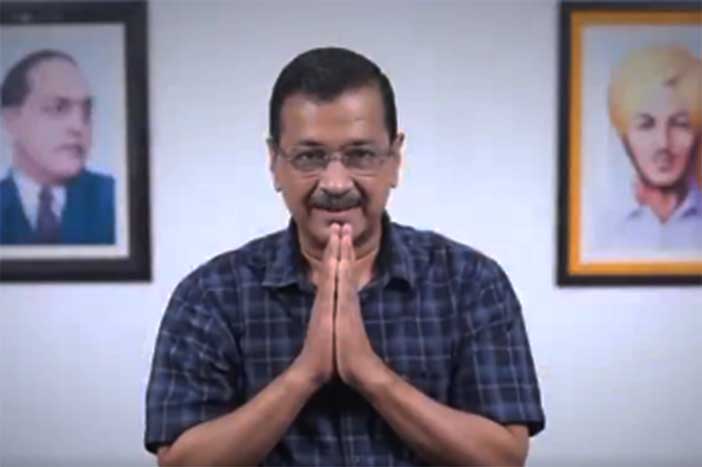
Arvind Kejriwal, Former Delhi Chief Minister.
The “Satyagraha” Boycott
The friction between the AAP leadership and Justice Sharma reached a boiling point earlier this week when Arvind Kejriwal informed the court that he would no longer participate in proceedings before her. In a letter to the judge, Kejriwal stated, “I have lost hope of getting justice from Justice Swarana Kanta. Therefore, I have decided to follow the path of Satyagraha as shown by Mahatma Gandhi.”
Sisodia and Pathak followed suit, informing the court they would remain unrepresented. This boycott came after Justice Sharma refused to recuse herself from the CBI’s plea against a previous discharge order that had favored the AAP leaders.
READ: Moderation in Courtroom Conduct Essential, J&K High Court Tells Trial Judge
Defending Institutional Integrity
Addressing the refusal to recuse and the subsequent attacks, Justice Sharma emphasized that the issue was larger than a single judge.
“Every unproven and unfounded accusation of bias or partiality is not merely put on an individual judge but also casts aspersions on the collective integrity of the institution of the judiciary itself,” she said. She warned that yielding to such pressure would set a “troubling precedent” where litigants could effectively “judge-shop” by making unfounded allegations.
The judge concluded by stating that the court must stand up for itself when necessary, even if the path is difficult. A detailed written order on the contempt proceedings is expected to be released late Thursday evening.
Don’t Miss:CJI Surya Kant Recuses from Hearing Pleas Challenging Election Commissioner Appointment Law
Don’t Miss:Justice Yashwant Varma Resigns During the Pendency of Formal Inquiry on Cash Discovery