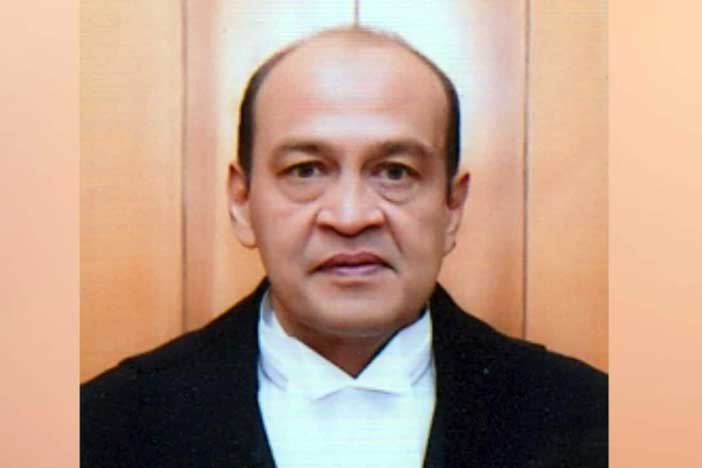
Justice Yashwant Verma.
Justice Yashwant Varma Resigns During the Pendency of Formal Inquiry Against Him: New Delhi / Prayagraj — Justice Yashwant Varma resigned from the Allahabad High Court on Friday, bringing to a close a fast-moving sequence of events that began with the discovery of alleged unaccounted cash at his official residence during his tenure at the Delhi High Court and culminated in the initiation of proceedings under the Judges Inquiry Act.
The resignation follows weeks of escalating institutional action, including internal judicial scrutiny and the early stages of a statutory inquiry mechanism that could have led to his removal from office through parliamentary process.
Cash Discovery and Initial Alarm
The controversy began when authorities reportedly discovered a substantial amount of unaccounted cash at premises linked to Justice Varma while he was serving as a judge of the Delhi High Court. Although precise details of the seizure were not officially disclosed, the development quickly raised serious concerns within judicial and government circles.
The discovery triggered internal consultations at the highest levels of the judiciary, with the matter seen as potentially serious enough to warrant formal action beyond in-house procedures.
Shift to Formal Inquiry Process
As scrutiny intensified, the case moved toward a more structured legal framework under the Judges Inquiry Act, 1968, which governs the investigation and possible removal of judges of the higher judiciary in India.
Under this law, a motion for inquiry can be initiated in Parliament, followed by the constitution of a committee to examine evidence and determine whether charges of misbehavior or incapacity are established. If proven, the process can culminate in impeachment proceedings.
Legal observers noted that the initiation of steps under the Act signaled the gravity of the allegations. “Once the statutory route is activated, it reflects a threshold where informal mechanisms are no longer considered sufficient,” said a senior constitutional expert.
READ: “Marital Status Irrelevant for Protection of Live-In Couples, Says Delhi High Court”
Mounting Pressure and Institutional Response
In parallel with the potential parliamentary process, the judiciary’s internal mechanisms also came into play. Senior members of the bench are understood to have engaged in consultations over the implications of the case, given its potential impact on public confidence in the institution.
The situation placed the judiciary in a sensitive position, balancing the need for due process with the imperative of maintaining institutional credibility.
Over time, pressure mounted on Justice Varma to step down, particularly as the prospect of a full-fledged inquiry under the Judges Inquiry Act became more likely. Such proceedings, if carried through, would have involved detailed examination of financial records, witness testimonies, and cross-institutional coordination.
Resignation Ahead of Escalation
Justice Varma’s resignation, submitted to the President in accordance with constitutional provisions, effectively halts the need for further escalation under the Judges Inquiry Act framework.
By stepping down, he avoids the possibility of a protracted and highly visible impeachment process in Parliament. Legal experts say such resignations, while not uncommon in comparable situations, often leave key questions unresolved.
“This brings procedural closure but not necessarily substantive closure,” said a senior advocate. “The inquiry route is designed to establish findings on record. A resignation short-circuits that process.”
READ: Allahabad High Court Awards Rs 8 Lakh Compensation for Death of Unborn Child in Train Accident
Broader Questions on Accountability
The episode has reignited debate over transparency and accountability in India’s higher judiciary. Critics argue that while the Judges Inquiry Act provides a formal mechanism, its use remains rare and often politically complex.
The Supreme Court of India has historically relied on in-house procedures to address allegations against judges, but cases involving potential financial impropriety have tended to draw greater public attention and demand more formal scrutiny.
The lack of detailed public disclosure in Justice Varma’s case has also prompted calls for clearer communication from institutions involved in such proceedings.
With the resignation now effective, attention will shift to whether any parallel investigations—administrative or criminal—will continue independently of the judicial removal process.
For the Allahabad High Court, one of India’s largest and busiest courts, the immediate task will be to ensure continuity of judicial work to fill the vacancy created by Justice Yashwant Varma’s resignation.
More broadly, the case is likely to influence ongoing discussions about reforming mechanisms for judicial accountability, particularly in situations involving allegations of financial misconduct.
Justice Varma’s departure closes a dramatic chapter that moved rapidly from an initial discovery at a judge’s residence to the brink of a formal statutory inquiry—underscoring both the strengths and limitations of India’s current system for addressing allegations against members of the higher judiciary.
READ: Did Magistrate Fabricate Records to Deny Juvenile Bail? Rajasthan HC Orders Probe