Resolution claims judgment in Rejanish KV v. K Deepa dilutes Bar’s independence and disrupts 75:25 recruitment ratio between judiciary and advocates.

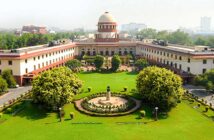
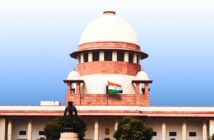
Representational Image.
Kochi, November 3, 2025: A group of 201 practising lawyers in Kerala have moved a resolution before the Kerala High Court Advocates’ Association (KHCAA) opposing the recent Supreme Court judgment in Rejanish KV v. K Deepa & Ors, which allows judicial officers with prior experience as lawyers to be considered for appointment as District Judges under the Bar quota.
The resolution, signed by advocates practising before the Kerala High Court, contends that the apex court’s ruling “undermines the independence of the Bar” and destabilises the long-standing 75:25 recruitment ratio between the judicial service and the Bar for appointments to the District Judiciary.
“Dilution of Article 233(2) intent”
In its decision, the Supreme Court interpreted Article 233(2) of the Constitution to mean that judicial officers who had seven years of combined experience — both as advocates and later as members of the judicial service — are eligible for direct recruitment to the post of District Judge.
However, according to the Kerala lawyers’ resolution, the Constitution draws a clear distinction between two recruitment streams: promotions from within the judicial service under Article 233(1), and direct recruitment from among advocates not already in government service under Article 233(2).
“A plain reading of Article 233 makes this distinction unmistakably clear,” the resolution said. “Clause (1) deals with appointments and promotions from among judicial officers in service, while clause (2) specifically provides for appointment of persons ‘not already in the service of the Union or of the State.’”
The lawyers argued that the Supreme Court’s interpretation effectively erases this constitutional boundary, allowing judicial officers — who are already part of the service — to compete for positions meant exclusively for practising advocates.
Bar’s independence at stake, say lawyers
The resolution emphasised that since the 2002 All India Judges’ Association case, 25 percent of District Judge posts have been reserved exclusively for advocates with at least seven years of continuous practice. Allowing judicial officers to enter through this route, the lawyers said, “curtails opportunities for the Bar and erodes its constitutional role in the justice system.”
The lawyers took particular exception to the Supreme Court’s observation in paragraph 146 of the Rejanish KV judgment, where the Bench remarked that “the experience judicial officers gain while working as judges is much greater than that gained while working as advocates.”
“This proposition diminishes the constitutional role and contribution of the Bar,” the resolution said, adding that the decision has “profound implications for advocates across India, significantly curtailing opportunities for career advancement.”
READ: Pioneer Legal Teams Up with Jurisphere for AI-Powered Legal Solutions
Practical implications for Kerala recruitment
The resolution further warned that the judgment has already created practical difficulties in the ongoing recruitment process for District Judges in Kerala, where confusion has arisen over eligibility criteria and quota allocation.
Call for coordinated legal challenge
On these grounds, the signatories have urged the KHCAA Executive Committee to take immediate steps to file a review or curative petition before the Supreme Court, seeking reconsideration of the interpretation of Article 233(2). The lawyers also requested the Association to coordinate with other Bar associations across India to collectively present the issue before the apex court.
They have additionally appealed to the KHCAA to approach the Supreme Court for permission to continue the ongoing recruitment process in Kerala’s district judiciary under the pre-existing criteria until the issue is resolved.
If pursued, the move could trigger a wider national debate on the balance between judicial service promotions and Bar independence — a debate that strikes at the very heart of how India’s judiciary maintains diversity, fairness, and constitutional integrity in its higher ranks.
READ: Madras High Court Recognizes Cryptocurrency as Property