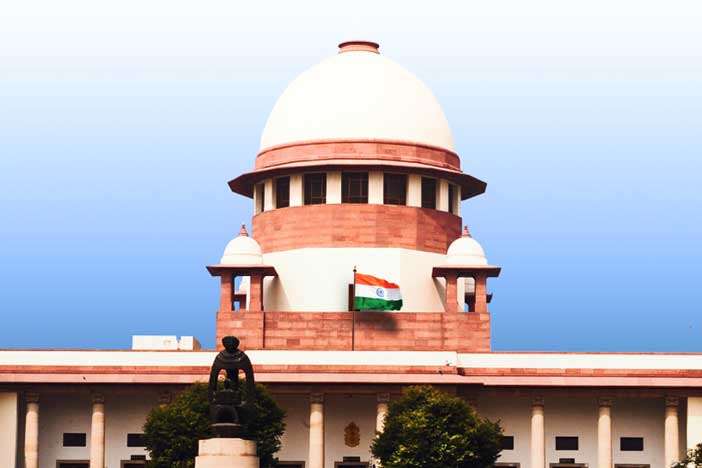
Supreme Court of India.
AI Could Resolve 60% of India’s Litigation Backlog: Justice Manmohan: New Delhi, India – November 29, 2025 – The integration of Artificial Intelligence (AI) into India’s judicial process could revolutionize the country’s legal system, with AI potentially resolving more than 60 percent of litigation by automating routine, small-ticket cases. This ambitious prediction was made by Supreme Court Justice Manmohan during his keynote address at the India Law, AI, and Tech Summit 2025 held in Delhi on Saturday.
Speaking to a gathering of legal experts, policymakers, and technology leaders, Justice Manmohan emphasized the transformative potential of AI in addressing India’s overwhelming litigation backlog, which currently exceeds five crore cases (50 million cases). He suggested that by diverting minor, repetitive disputes—such as traffic violations, check bouncing cases, and other small-ticket offenses—to AI-driven systems, courts could drastically reduce pendency and free up resources for more complex matters that require human adjudication.
AI for Routine, Small-Ticket Cases: A Game-Changer for Pendency
Justice Manmohan outlined the kind of cases that could be handled by AI systems, which, according to him, do not require nuanced judicial evaluation. “Small-ticket offenses, such as traffic challenges or check bouncing cases, could be decided by AI because these are matters of routine and can be easily dealt with,” he explained.
By shifting such cases to AI-powered platforms, Justice Manmohan projected that more than 60% of the existing litigation in India could be resolved, allowing the courts to focus on the remaining 40% of cases that demand more complex legal analysis. This would significantly ease the burden on the judiciary and help clear the backlog that has long plagued the country’s legal system.
The use of AI could also help in cases that involve large-scale, repetitive legal matters, such as land acquisition disputes and mass filings, by clustering thousands of similar cases together and enabling courts to dispose of entire blocks of cases through a single ruling.
“The impact on pendency would be transformative if routine cases were shifted to AI-assisted processes,” Justice Manmohan noted. “This would not only expedite the process but also improve access to justice for citizens who otherwise face long delays.”
READ: Supreme Court Raps Patna High Court Over Arbitration Review, Calls Process a “Foe in Practice
Supreme Court’s AI Pilot: SU-PACE
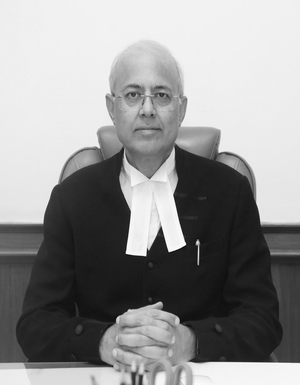
Justice Manmohan, Supreme Court of India.
In a significant development, Justice Manmohan also shared that the Supreme Court has already begun piloting an AI-driven tool named SU-PACE, which is designed to assist judges by reading case files, extracting issues, and flagging relevant legal precedents.
Describing SU-PACE as a “digital research assistant,” Justice Manmohan explained that the AI tool is intended to help judges reduce the time spent reviewing bulky paper books and voluminous case filings. “It prepares a summary of the readings, identifies the issues, and calls out relevant laws,” the judge explained. However, he clarified that SU-PACE would not make judgments, but rather highlight what is pertinent for the judge’s consideration, allowing them to focus on critical decision-making processes.
This pilot, Justice Manmohan noted, is part of a broader move towards hybrid judicial models that combine human expertise with AI technology. He predicted that such systems would take over routine, clerical tasks, thereby enabling judges to concentrate on more complex cases that require human judgment, empathy, and constitutional sensitivity.
“The ultimate character of justice is not the algorithm,” Justice Manmohan added. “It is the integrity, independence, and intellect of the human judge.”
READ: Punjab and Haryana High Court seeks response from judge accused of granting bail to relative
Concerns and Challenges with AI in Law
While the potential of AI in the legal system was widely acknowledged, Justice Manmohan also cautioned about the risks and challenges that accompany its deployment. He highlighted concerns related to algorithmic bias, hallucinated case laws, and privacy issues as some of the pitfalls that must be addressed before AI can be widely used in judicial decision-making.
“There are real concerns that need to be confronted before AI can be deployed on a large scale,” he noted, emphasizing the importance of ensuring fairness, accuracy, and transparency in AI tools used in the legal system.
Despite these challenges, Justice Manmohan’s speech underscored the promise of AI to bring about greater efficiency and transparency in India’s legal process.
Mixed Reactions from Legal Experts
While Justice Manmohan was optimistic about the future of AI in the judiciary, some other legal professionals at the summit voiced concerns about over-reliance on technology.
Dr. Lalit Bhasin, Senior Lawyer and President of the Society of Indian Law Firms (SILF), echoed concerns about the risks of becoming overly dependent on AI. Recalling an interview with young lawyers, he pointed out that many of their drafts were identical, suggesting a troubling over-reliance on technology rather than critical thinking.
“What does this indicate? It indicates that we have virtually become slaves to technology. There is minimal application of mind, and that is a dangerous course of action for the legal profession,” Dr. Bhasin said.
He also emphasized that while AI tools could make certain aspects of legal work more efficient, they should never be seen as substitutes for human judgment. “Use it as a tool, but don’t become a slave to it. Technology can never replace the human brain,” he warned.
Dr. Bhasin also highlighted the deeper structural issues that contribute to India’s persistent legal backlog, including outdated laws, overlapping regulations, and poorly drafted legislation. He argued that merely implementing technology would not address these fundamental issues, which continue to impede the smooth functioning of the legal system.
READ: Gujarat High Court Rules NCLT President Has No Power to Shift Cases Across Benches
The Road Ahead: Hybrid Judicial Models and Technological Integration
While the debate around AI’s role in law continues, Justice Manmohan’s address marked a pivotal moment in India’s judicial reform efforts. The Supreme Court’s pilot of the SU-PACE tool is a clear indication that the judiciary is taking steps toward embracing technology to improve efficiency and reduce case backlogs. However, as the legal community grapples with the challenges of integrating AI into the justice system, it is clear that technology will remain a tool to support, not replace, human judgment.
Looking ahead, hybrid judicial models, where AI assists judges in routine administrative tasks while preserving the integrity of the judicial process, seem to be the future of India’s courts. As AI and law continue to intersect, balancing innovation with caution will be crucial to ensuring that justice remains fair, impartial, and accessible to all.
With AI tools like SU-PACE being tested in the Supreme Court, it is evident that the future of Indian jurisprudence could be shaped by a combination of human expertise and machine efficiency—leading to faster and more equitable justice for millions of litigants across the country.