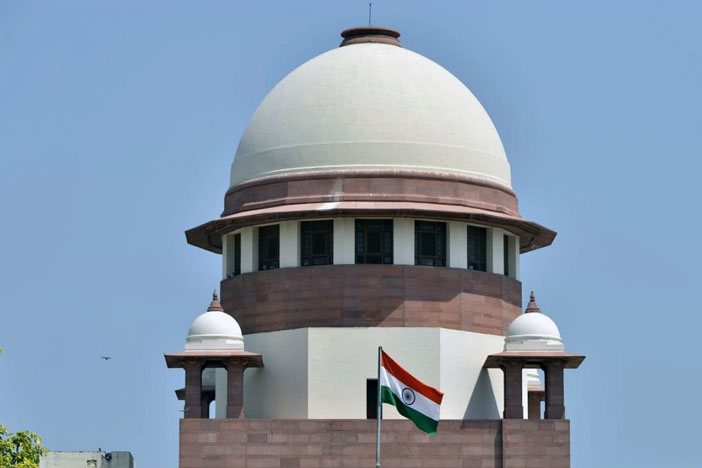
Supreme Court of India.
Supreme Court Police Media Briefing Manual: New Delhi, January 21, 2026 – The Supreme Court has directed all States to formulate a formal policy governing police media briefings, relying on a comprehensive “Police Manual for Media Briefing” submitted before it by Senior Advocate Gopal Sankaranarayanan, who appeared as amicus curiae in the matter. The Court has given the States three months to implement the directive.
A bench comprising Justices M.M. Sundresh and N.K. Singh underscored the importance of structured communication by police authorities and emphasized that prior delays in adopting guidelines had not achieved the desired results. “We deem it appropriate to direct the States to evolve an appropriate policy for media briefing by taking into consideration the Police Manual for Media Briefing furnished by the learned Amicus Curiae. The needful will have to be done within a period of three months from the date of receipt of a copy of this order,” the bench said.
READ: Supreme Court Directs High Courts to Report on 30% Women Representation in Bar Associations
The Manual, prepared after consulting the Union government and reviewing international practices, provides a detailed framework for all forms of police communication with the media and the public. It covers spokespersons, district media cells, on-scene officers, social media handles, press notes, interviews, SMS alerts, posters, and audio-visual content. Its primary objective is to balance the public’s right to timely and accurate information with the protection of victims, witnesses, suspects, and the integrity of ongoing investigations.
The Manual is divided into four parts: Foundation, Scope and Purpose; Authority, Structure and Workflow; How to Brief; and Operations, Training and Compliance. It also proposes a 90-day adoption plan divided into three phases: establishing institutional infrastructure, capacity building, and validation/audit. Central to the implementation is the constitution of Media Briefing Cells at each level.
READ: Non-Signatories Cannot Compel Arbitration, Supreme Court Rules in HPCL Case
Among the key principles laid out in the Manual are strict disclosure protocols. Every briefing must satisfy tests of legality, necessity, proportionality, and accountability. Briefings must not prejudge cases, disclose witness identities, or comment on merits of ongoing proceedings. Disclosures should be neutral and avoid references to caste, religion, disability, gender, migration status, or other sensitive identifiers unless strictly necessary for safety. Records of all briefings must be maintained, and only authorized spokespersons may communicate with the media.
The Manual also details guidelines for specific situations, including custodial deaths, alleged police excesses, suicides, and communal or caste-sensitive incidents. It emphasizes immediate acknowledgment of incidents, adherence to statutory legal procedures, non-sensational language, and inclusion of mental health helplines when applicable. Social media governance is another critical focus, recommending measures to limit engagement, avoid political commentary, and correct misinformation transparently. Unauthorized disclosures are treated as misconduct, with disciplinary and legal consequences prescribed.
The Supreme Court further directed that the Manual be uploaded on its website to ensure transparency and accessibility.
The matter arose in the context of Peoples Union for Civil Liberties v. State of Maharashtra, Criminal Appeal No. 1255/1999, where the Court had repeatedly emphasized the need for responsible and professional police interaction with the media to maintain public trust and uphold the rule of law.
By institutionalizing these guidelines, the Supreme Court aims to ensure that police communication remains professional, accurate, and sensitive to public interest, while avoiding trial by media and protecting the rights of all parties involved in criminal proceedings.
READ: In a First, Supreme Court Mandates Lawyers to Stick to Timelines for Oral Arguments