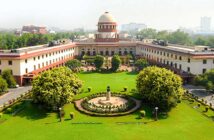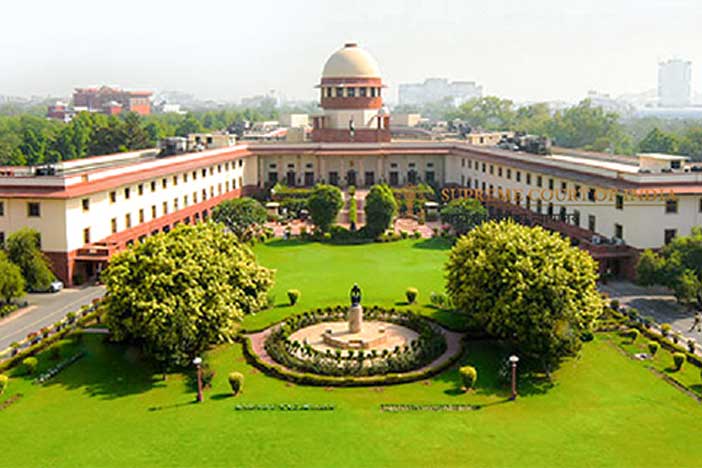
Supreme Court of India.
A lawyer has moved the Supreme Court challenging provisions of the Bharatiya Nagarik Suraksha Sanhita, 2023 (BNSS) that allow serving or retired judicial officers to be appointed as heads of prosecution offices under State governments. The petition, filed by advocate Subeesh PS, targets Section 20(2)(a) and 20(2)(b) of the BNSS.
These sections permit Sessions Judges, Magistrates, and retired judicial officers to hold senior positions such as Directors, Deputy Directors, and Assistant Directors in State-run prosecution departments. The petitioner argues that this setup undermines judicial independence by placing judges within an executive-controlled hierarchy.
READ: Supreme Court Imposes Cost on DDA, Urges Adoption of Litigation Policy to Avoid Delays
Why the petition says this is a problem
The plea contends that judges, who are constitutionally expected to act as neutral adjudicators, should not function under the administrative control of the State Home Department. “Once a judicial officer functions under the Home Department, even temporarily, the perception and reality of judicial independence are compromised,” the petition notes.
According to the plea, post-Independence reforms, particularly the Code of Criminal Procedure of 1973, were designed to separate investigation, prosecution, and adjudication—a structure that the BNSS provisions allegedly disrupt. The petitioner claims that these rules effectively revive a pre-Independence colonial model where magistrates combined executive, prosecutorial, and judicial powers.
Historical context: colonial vs modern system
The petition traces the issue back to the pre-independence Code of Criminal Procedure, 1898, where magistrates supervised investigations, prosecutions, and adjudications. Post-independence reforms eliminated this fusion to protect fair trial guarantees and ensure independence of the judiciary.
The BNSS provisions, according to the petitioner, reverse this progress by allowing judges to assume executive roles within prosecution departments. This, he argues, risks political or administrative interference in criminal trials.
READ: Google Accused of Infringing Patents: Delhi High Court Refers Gemini & Android Case to Mediation
Constitutional concerns
The plea cites Articles 50 and 235 of the Constitution, which mandate separation of judiciary from executive control and vest exclusive management of the subordinate judiciary in High Courts. It argues that allowing judges to head prosecution offices under executive authority violates these constitutional safeguards and undermines fairness in criminal proceedings.
The petition also raises concerns under Articles 14 and 21, claiming the provisions are arbitrary and violate the right to fair procedure.
READ: Delhi High Court Grants Interim Relief to Allcargo in Trademark Dispute Against “VRS ALLCARGO”
What the petitioner seeks
The plea urges the Supreme Court to strike down Sections 20(2)(a) and 20(2)(b) of the BNSS insofar as they allow judicial officers to head executive-controlled prosecution offices.
Alternatively, the petitioner seeks directions to restructure prosecution departments in line with Article 50 of the Constitution, ensuring judicial officers do not function under executive hierarchies. The plea also recommends strengthening independent prosecution cadres following the 14th Law Commission’s suggestions.
The matter is yet to be listed for hearing by the Supreme Court. Advocate Suvidutt MS filed the petition.
READ: Körber Takes Full Control of Godrej Supply Chain Business to Boost Automation in India