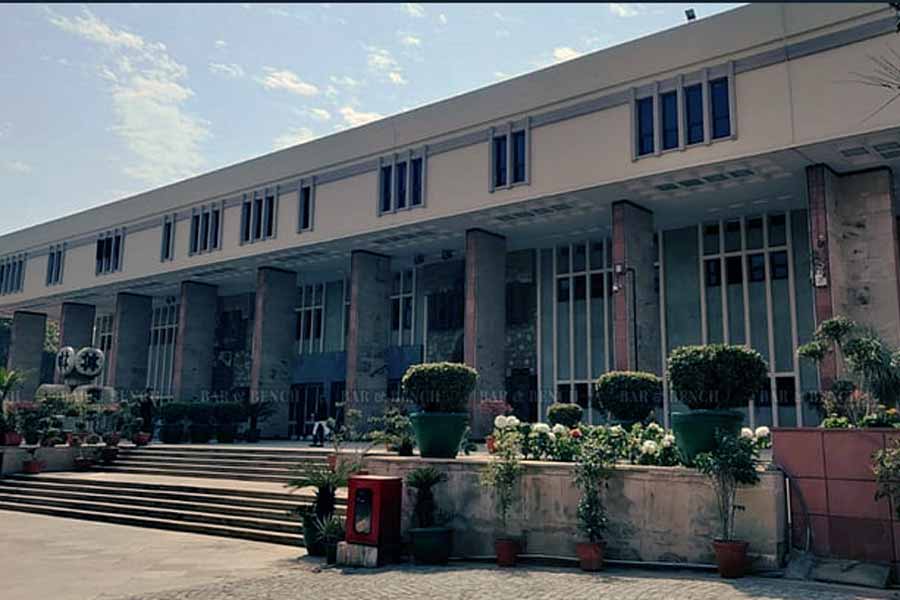
Delhi High Court.
NEW DELHI — In a landmark judgment expected to reshape the administrative and financial landscape of primary education in the national capital, the Delhi High Court has ruled that private unaided recognized schools do not require prior government approval to increase their fees, provided the hike is declared before the commencement of the academic session.
The ruling, delivered by Justice Anup Jairam Bhambhani, delivers a significant blow to the Directorate of Education (DoE). The court sharply criticized the regulatory body for attempting to “micro-manage” the fiscal affairs of private educational institutions, stating its actions betrayed a “studied indifference to both the letter of the law and binding precedent.”
However, in a crucial relief to thousands of households, the court drew a firm line against retrospective financial burdens. While granting schools the autonomy to set their rates moving forward, it explicitly barred them from collecting back-dated fee arrears from past academic sessions, noting that doing so would place an “inordinate and unacceptable burden” on parents and students.
+—————————————————————————————–+
| KEY TAKEAWAYS |
+—————————————————————————————–+
| • Pre-Session Hikes: Schools can raise fees without prior DoE approval if declared
before the academic year begins.
| • Mid-Session Restrictions: Prior DoE approval remains mandatory for any fee hikes
introduced during an ongoing academic year.
| • Regulation vs. Control: DoE’s role is strictly limited to preventing profiteering,
commercialization, and capitation fees; it cannot micro-manage school finances.
| • No Retrospective Arrears: Schools are barred from collecting back-dated fees; the
approved increases can only take effect from the April 2027 academic session.
+—————————————————————————————–+
The Roots of the Dispute
The judgment arrived via a batch of petitions led by Delhi Public School (DPS), Vasant Kunj, and Green Field School, which challenged a series of DoE orders that had systematically rejected their fee-hike proposals.
For years, private unaided schools in Delhi have argued that the DoE’s bureaucratic bottlenecks were choking their financial autonomy and infringing upon their constitutional right to run educational institutions. The schools contended that under the Delhi School Education Act (DSEA) of 1973, the government’s power to intervene was triggered only under specific, proven instances of profiteering or commercialization.
The DoE, conversely, maintained that it held sweeping powers to review and reject fee structures to protect consumers, often invoking “land clauses”—conditions placed in the original land allotment letters of school properties—to justify its stringent oversight.
READ: Section 138 NI Act Applies Only to Drawer of Cheque, Not Joint Account Holder: Allahabad HC
A Rebuke of “Gratuitous Rhetoric”
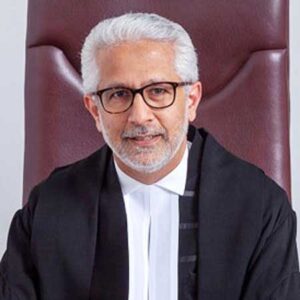
Justice Anup Jairam Bhambhani, Delhi High Court.
Justice Bhambhani parsed Section 17(3) of the DSEA, concluding that the statutory obligation on schools is limited to filing a statement of the proposed fee structure with the DoE before the academic year begins. They are not required to wait for a green light from the government.
“Under section 17(3) of the DSE Act no prior permission or sanction is required by a private, un-aided, recognised school to increase its fee at the commencement of an academic session,” the Court held.
The court went further to address the DoE’s frequent allegations that schools maintaining surplus funds were guilty of commercialization. Justice Bhambhani dismissed these findings as “gratuitous rhetoric” stemming from a flawed understanding of standard accounting practices. The court clarified that maintaining a reasonable surplus for future growth, infrastructure development, and contingency is a legitimate facet of running an institution.
“That mere availability of surplus funds with a private, un-aided, recognised school, howsoever large, cannot be the sole basis for the DoE to infer that the school is indulging in commercialisation or profiteering… The aspect of commercialisation or profiteering can only be examined and determined by the DoE after conducting a full-dressed financial audit of a school.”
The judgment also dismantled the DoE’s reliance on the “land clause” distinction, ruling that such clauses cannot expand the government’s statutory powers beyond what is explicitly written in the DSEA.
READ: BRICS Justice Ministers Agree to Use ADR for Resolving Disputes
Drawing the Line: The Parent Perspective
While the ruling vindicates the structural and financial arguments levied by private school managements, the High Court did not give the institutions carte blanche to penalize families for historical administrative delays.
Because some of the challenged DoE rejection orders dated as far back as the 2016–2017 academic cycle, the schools had sought the right to recover cumulative arrears from parents. Recognizing the potential economic shock this would cause to families, the court flatly refused.
Justice Bhambhani ruled that the last fee increases proposed by the petitioner schools would only be permitted to take effect prospectively, starting from the next clean slate: the academic session beginning April 2027.
Legal Representation
The scale of the litigation was reflected in the heavy-hitting legal teams assembled on both sides. The petitioner schools were represented by a roster of Senior Advocates including JP Sengh, Diya Kapur, HL Tiku, and Puneet Mittal. The Government of NCT of Delhi and the DoE were defended by a team led by Additional Solicitor General Chetan Sharma and Standing Counsel Sameer Vashisht.
By quashing the DoE’s rejection orders and closing pending disputes predicated on a flawed interpretation of the law, the Delhi High Court has re-established the boundaries of state regulation. The DoE retains its mandate to police genuine financial malfeasance through formal audits under Section 18(5) of the Act, but its era of micro-managing day-to-day school ledgers has been decisively brought to a close.